
Your Garage Door Springs Are Working Harder Than You Think
Every time you open or close your garage door, the springs do the heavy lifting — literally. A standard two-car garage door can weigh between 150 and 250 pounds, and it's the springs that counterbalance all that weight so your opener doesn't have to do it alone. Most homeowners in Waldorf don't think about their garage door springs until one breaks, and when that happens, it's usually at the worst possible time — on a freezing January morning or right when you're trying to leave for work.
Understanding how long your springs should last, what warning signs to watch for, and when to call a professional can save you from an unexpected (and potentially dangerous) situation.
How Long Do Garage Door Springs Last?
The lifespan of a garage door spring is measured in cycles. One cycle equals one full open-and-close of the door. Most standard torsion springs are rated for approximately 10,000 cycles, which translates to roughly 7 to 10 years of typical residential use.
However, several factors can shorten or extend that lifespan:
- Frequency of use: If your garage door is the primary entry point for your household, you might be running four to six cycles per day instead of the average two. That can cut your spring life nearly in half.
- Climate and humidity: Here in the Waldorf area, we experience hot, humid summers and cold winters. Temperature swings cause the metal in springs to expand and contract, accelerating wear over time. Humidity can also lead to rust, which weakens the coils.
- Maintenance habits: Springs that are regularly lubricated and inspected tend to last longer than those that are neglected.
- Spring quality: Not all springs are created equal. Higher-cycle springs (rated for 20,000 or even 25,000 cycles) are available and can be a smart investment for busy households.
Torsion Springs vs. Extension Springs: What's the Difference?
Before we go further, it helps to know which type of springs your garage door uses. There are two main types:
Torsion Springs
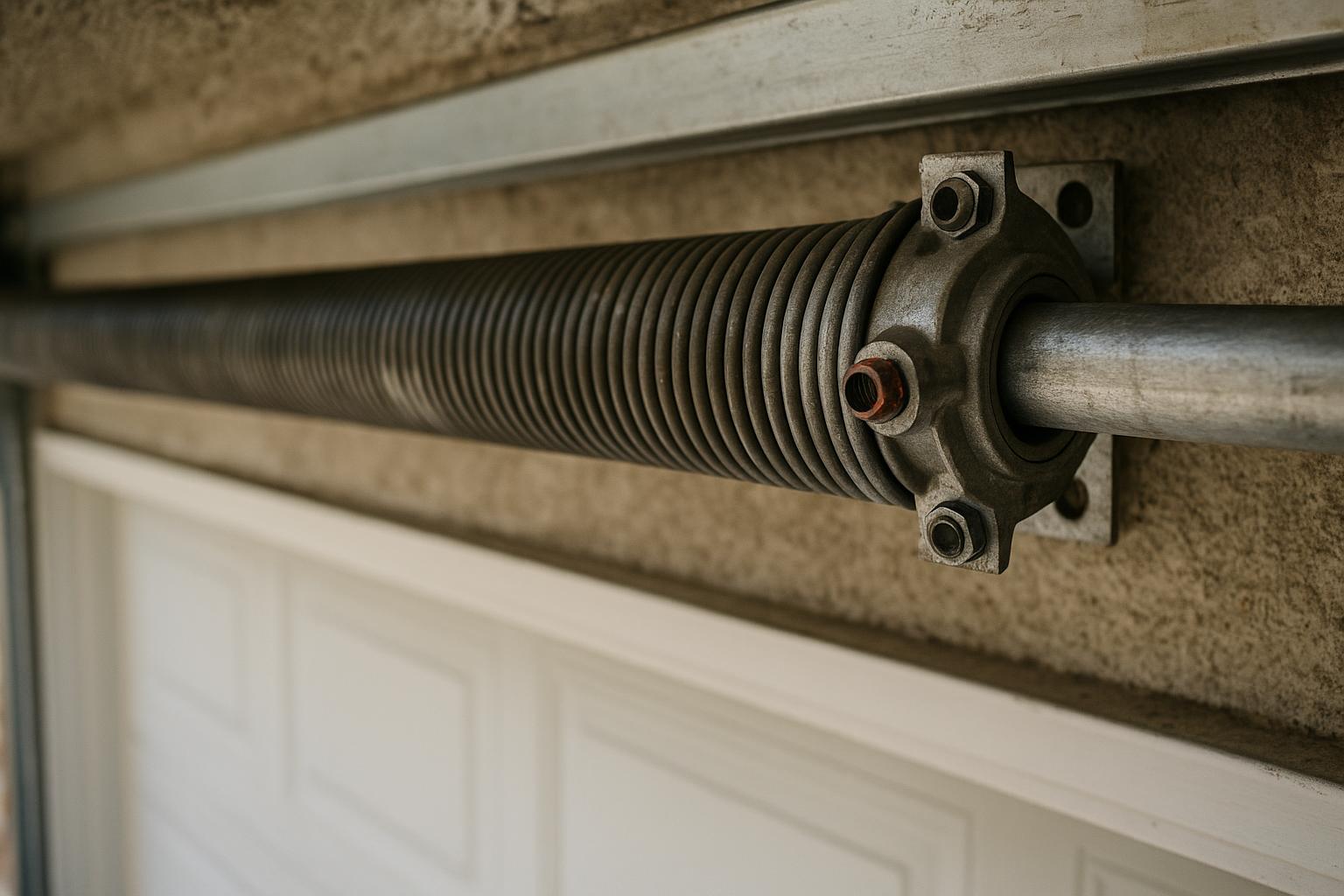
These are mounted horizontally above the garage door opening. They use torque to lift the door and are the more common type found in modern garage doors. Torsion springs tend to be more durable, offer smoother operation, and are generally safer when they break because they remain on the shaft.
Extension Springs
These run along the horizontal tracks on either side of the door. They stretch and contract to provide lifting force. Extension springs are typically found on older or lighter single-car doors. When they break, they can snap violently, which is why safety cables should always be installed alongside them.
If you're unsure which type your garage door uses, a quick visual inspection or a call to a local garage door professional can give you the answer.
Warning Signs Your Springs Are Wearing Out
Springs rarely fail without giving some warning first. Here are the key signs that your garage door springs may be nearing the end of their life:
- The door feels heavier than usual: Try lifting your garage door manually (after disconnecting the opener). If it feels significantly heavier or won't stay open on its own at the halfway point, your springs are losing tension.
- The door opens unevenly: If one side rises faster than the other, one spring may be weaker or close to breaking.
- Visible gaps in the spring coils: A healthy torsion spring has tightly wound coils. If you notice a visible gap or separation, the spring has already broken or is about to.
- The opener is straining: If your garage door opener sounds like it's working harder than normal, the springs may not be providing enough counterbalance, forcing the motor to compensate.
- The door slams shut: A door that drops quickly when closing is a serious safety hazard and a clear sign of spring failure.
- Rust on the coils: Rust increases friction and weakens the metal. If your springs are visibly corroded, their remaining lifespan is limited.
Can You Replace Garage Door Springs Yourself?
This is one of the most common questions we hear from homeowners, and the short answer is: we strongly advise against it. Garage door springs are under extreme tension. A torsion spring stores enough energy to cause serious injury or even death if it's mishandled during removal or installation.
Professional garage door technicians have the proper tools, training, and experience to replace springs safely. The job typically takes under an hour for a trained professional, and the peace of mind is well worth the investment.
In Charles County, building codes and safety standards also apply to garage door repairs, so having the work done by a qualified technician ensures everything is up to code.
Should You Replace Both Springs at the Same Time?
If your garage door has two torsion springs (which most double-car doors in Waldorf do), we almost always recommend replacing both at the same time — even if only one has broken. Here's why:
- Both springs have the same age and wear. If one has broken, the other is likely close behind.
- Mismatched springs cause uneven tension, which can lead to premature wear on the new spring, damage to the opener, and uneven door movement.
- It saves money in the long run. The labor cost for replacing springs is the same whether you're doing one or two. Replacing both now means you avoid paying for a second service call in a few months.
How to Extend the Life of Your Garage Door Springs
While springs will eventually wear out no matter what, regular maintenance can help you get the most out of them:
- Lubricate the springs every three to four months with a silicone-based or white lithium garage door lubricant. This reduces friction and prevents rust.
- Schedule annual preventive maintenance. A professional inspection can catch early signs of wear before a spring fails completely.
- Keep the door balanced. If your door isn't properly balanced, the springs work harder than they need to. A technician can adjust the tension to ensure even wear.
- Consider upgrading to high-cycle springs. If you use your garage door frequently, investing in springs rated for 20,000 or more cycles can significantly extend the time between replacements.
When to Call a Professional in Waldorf
If you've noticed any of the warning signs mentioned above, or if your springs are approaching the 7- to 10-year mark, it's time to have them inspected. Don't wait for a full break — a snapped spring can leave your car trapped in the garage, damage your door or opener, and create a serious safety risk for your family.
At Waldorf Garage & Gate, we provide fast, reliable spring replacement and preventive maintenance services throughout Waldorf, La Plata, White Plains, and the surrounding Charles County communities. Whether you need an emergency repair or want to get ahead of a potential problem, our team is here to help keep your garage door running safely and smoothly.
Have questions about your garage door springs? Give us a call or schedule an inspection today. A little attention now can prevent a major headache later.