
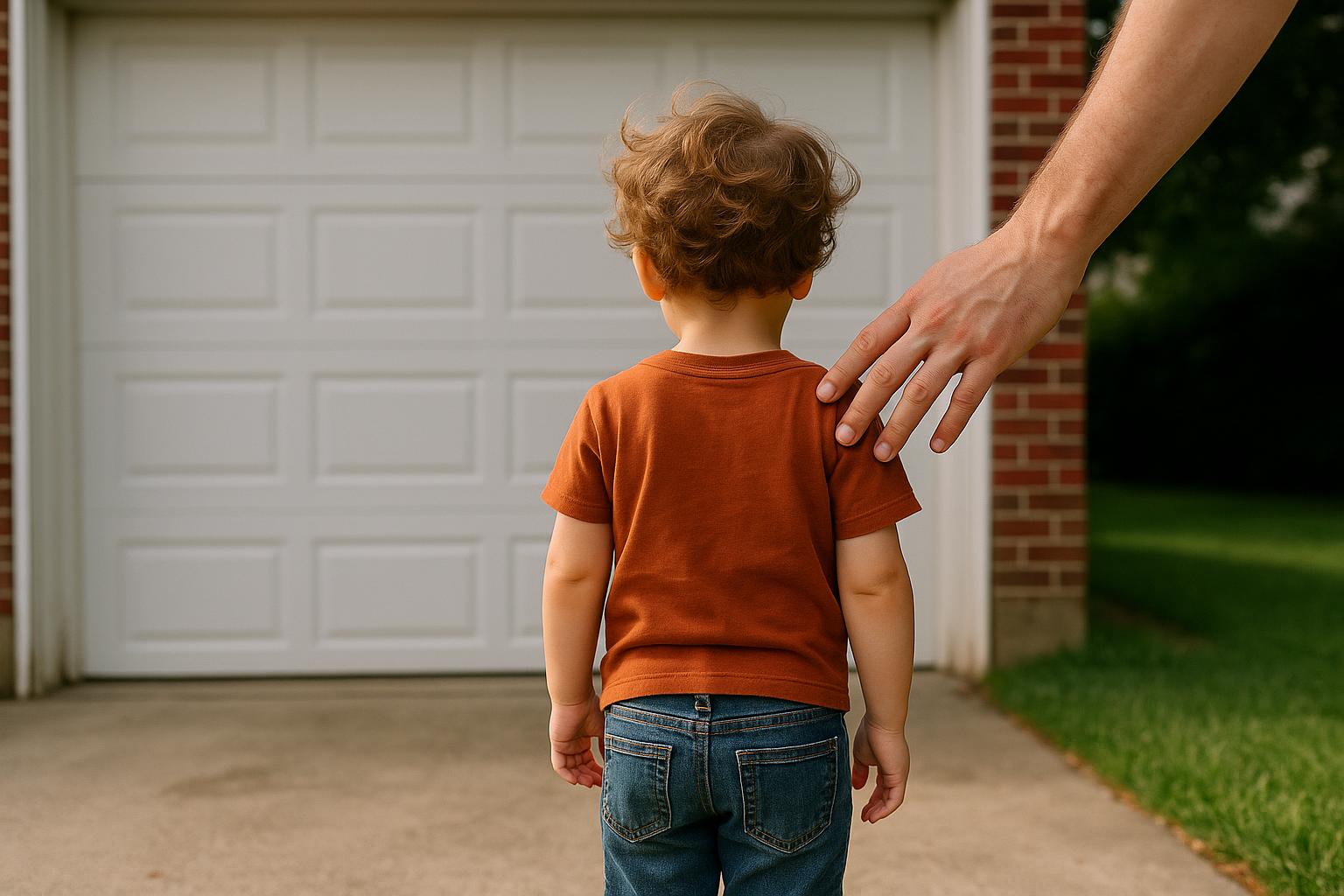
Your Garage Door Is More Dangerous Than You Think
Most homeowners in Waldorf don't think twice about their garage door once it's installed. It goes up, it comes down, and life moves on. But here's a sobering fact: the U.S. Consumer Product Safety Commission reports that roughly 20,000 people are treated in emergency rooms each year for garage door-related injuries, and children are among the most vulnerable.
Your garage door is the single largest moving object in your home. It can weigh anywhere from 130 to over 400 pounds, and the mechanical components that make it operate — springs, cables, tracks, and openers — carry tremendous force. For families with young children, taking a few deliberate steps to childproof your garage door can prevent a life-altering accident.
Test Your Auto-Reverse Feature Regularly
Federal law has required garage door openers manufactured after 1993 to include an auto-reverse mechanism. This feature forces the door to reverse direction if it encounters an obstruction while closing. But just because your opener has this feature doesn't mean it's working properly right now.
Here's a simple test you can do today:
- Place a 2x4 piece of lumber flat on the ground in the center of the door's path.
- Press the button to close the garage door.
- When the door contacts the wood, it should immediately reverse direction and open back up.
If the door doesn't reverse — or if it hesitates before reversing — your opener needs adjustment or repair. This is not something to put off. If you're in the Waldorf or Charles County area and your auto-reverse isn't functioning correctly, call a professional to inspect and recalibrate the system before someone gets hurt.
Check Your Photo-Eye Sensors
In addition to the mechanical auto-reverse, modern garage door openers use photo-eye sensors mounted near the bottom of the door tracks on either side. These sensors project an invisible beam across the doorway. If anything breaks that beam while the door is closing — a child, a pet, a bicycle — the door should stop and reverse.
Over time, these sensors can become misaligned, dirty, or damaged. Here's how to check them:
- Visual inspection: Both sensors should have a steady light (usually green or amber). If one is blinking, the sensors are likely misaligned.
- Clean the lenses: Wipe the sensor lenses with a soft cloth. Dust, cobwebs, and grime can interfere with the beam.
- Test the beam: While the door is closing, wave a broom handle or similar object through the sensor beam. The door should immediately stop and reverse.
If your sensors are malfunctioning or missing entirely — which can happen with very old systems — it's time for an upgrade. This is one of the most important safety features protecting your children.
Keep Remote Controls and Wall Buttons Out of Reach
Children are naturally curious, and a garage door remote is an irresistible toy. A child who repeatedly presses the button while playing near the door is at serious risk. Here are some practical guidelines:
- Mount your wall-mounted door control button at least five feet off the ground, out of a young child's reach.
- Store remote controls where children cannot access them — not in a cup holder, on a low table, or in an easily opened drawer.
- If you use a keypad outside the garage, choose a code your children don't know, and avoid obvious combinations like birthdays.
- Teach older children that the garage door is not a toy and should never be operated without adult supervision.
Eliminate Finger Traps
Older garage doors, particularly those with panel sections, can have gaps between panels that pinch or trap small fingers as the door moves. Modern garage doors are designed with pinch-resistant panels that minimize the space between sections.
If your garage door is more than 15 to 20 years old, take a close look at the panel joints. If you can fit a finger between the sections when the door is in motion, you have a pinch hazard. Upgrading to a newer door with pinch-resistant technology is one of the smartest investments a Waldorf family can make — not just for safety, but also for energy efficiency and curb appeal.
Secure the Emergency Release Cord
Every garage door opener has a red emergency release cord that hangs from the trolley on the ceiling track. Pulling this cord disconnects the door from the opener, allowing you to operate the door manually during a power outage or emergency. It's an essential feature, but it can also be a hazard.
A child who pulls the emergency release while the door is open could cause the door to come crashing down if the springs are worn or the door is unbalanced. To reduce this risk:
- Keep the cord short enough that small children cannot reach it. You can tie it up higher or use a cord shortener.
- Never leave the garage door open and unattended when children are playing nearby.
- Have your springs and door balance checked annually by a professional to ensure the door won't free-fall if the opener is disengaged.
Schedule Preventive Maintenance
Many of the dangers described above develop gradually. Springs weaken, sensors drift out of alignment, cables fray, and hardware loosens — all without obvious warning signs. A preventive maintenance visit from a qualified technician catches these issues before they become emergencies.
During a typical maintenance appointment, a technician will:
- Inspect and lubricate all moving parts
- Test the balance of the door
- Check spring tension and cable condition
- Verify that all safety features are functioning properly
- Tighten loose bolts, brackets, and hinges
For families in Waldorf, La Plata, White Plains, and the surrounding communities, we recommend scheduling maintenance at least once a year. It's a small investment that protects your family and extends the life of your entire garage door system.
When to Call a Professional
Some childproofing steps — like cleaning sensors and storing remotes safely — are simple DIY tasks. But anything involving springs, cables, tracks, or opener adjustments should be handled by a trained technician. These components are under extreme tension and can cause serious injury if mishandled.
At Waldorf Garage & Gate, we help families throughout Charles County make their garage doors safer every day. Whether you need a sensor replacement, an opener upgrade, a full door installation with modern safety features, or just an annual tune-up, we're here to help.
Your garage door should make your life easier, not put your family at risk. If it's been a while since you've thought about garage door safety, today is the day to start. Give us a call or schedule a service appointment — your peace of mind is worth it.