
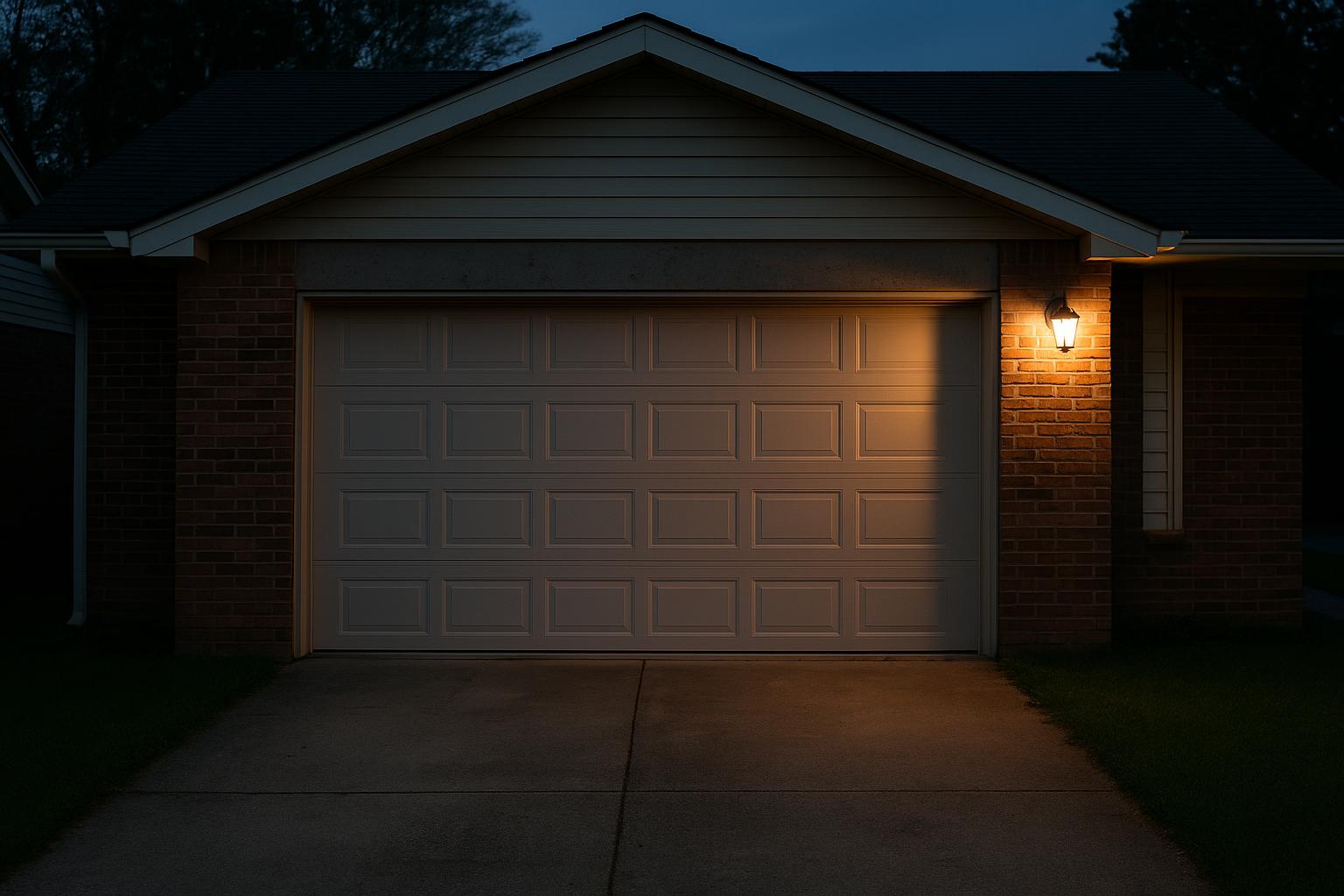
Your Garage Door Might Be Your Home's Biggest Vulnerability
When most homeowners in Waldorf think about home security, they think about deadbolts, alarm systems, and motion-sensor lights. But there's one entry point that often gets overlooked — the garage door. It's the largest opening in your home, and for many families, it's used more often than the front door.
A garage door that's outdated, poorly maintained, or lacking modern safety features can be an open invitation for intruders. According to the FBI, residential burglaries frequently involve entry through the garage, especially when the door is easy to force open or the opener uses outdated technology.
Here's how to identify whether your garage door is a security risk and what you can do to protect your home and family.
1. Your Garage Door Opener Uses Fixed Codes
If your garage door opener is more than 15 to 20 years old, there's a good chance it uses a fixed-code system. This means your remote sends the same radio signal every time you press the button. The problem? Thieves can use inexpensive devices to intercept and copy that signal, giving them access to your garage whenever they want.
Modern garage door openers use rolling code technology, which generates a new, unique code every time the remote is activated. This makes it virtually impossible for someone to duplicate your signal.
What to Do
If your opener predates rolling code technology, it's time for an upgrade. Replacing an outdated opener is one of the most impactful security improvements you can make. Many Waldorf homeowners are surprised at how affordable and quick the installation process is.
2. The Door Can Be Manually Forced Open
A garage door that wobbles, has gaps along the edges, or doesn't sit flush against the ground can often be pried open with basic tools. Over time, tracks can become misaligned, panels can warp, and weatherstripping can deteriorate — all of which create vulnerabilities.
Try this simple test: with the door closed and the opener disengaged, see if you can lift the door from the outside. If it moves easily or if you can see daylight around the edges, your door isn't providing the barrier it should.
What to Do
- Have a technician inspect and realign the tracks.
- Replace worn or damaged weatherstripping along the bottom and sides.
- Consider installing a garage door defender or floor-mounted lock for added resistance.
- If the panels are warped or cracked, a door replacement may be the most effective long-term solution.
3. You Don't Have an Automatic Lock
Many homeowners assume their garage door locks automatically when it closes. That's not always the case. Some older doors rely on a simple latch or have no locking mechanism at all beyond the weight of the door itself. A determined intruder can defeat this in seconds.
Newer garage door openers often come with automatic locking systems that engage a deadbolt-style lock every time the door closes. This adds a critical layer of security that passive weight alone can't provide.
What to Do
Ask your garage door technician whether your current system includes an automatic lock. If it doesn't, this feature can often be added as part of an opener upgrade. For homeowners in the Waldorf and Charles County area, this is an especially worthwhile investment given the mix of suburban and semi-rural properties in the region.
4. The Emergency Release Is Accessible from Outside
Every garage door has an emergency release cord — that red handle hanging from the track inside your garage. It's designed to let you manually open the door during a power outage. But here's the security concern: if your door has windows or gaps at the top, an intruder can use a coat hanger or similar tool to reach in and pull that cord, disengaging the opener and lifting the door by hand.
This technique is well-documented and takes less than 10 seconds.
What to Do
- Install an emergency release shield that blocks access to the cord from outside.
- Use a zip tie to secure the release lever so it can't be triggered with a hook (while still being breakable in a real emergency).
- If your door has windows, consider frosted or obscured glass so intruders can't see the release mechanism.
5. You Have No Smart Monitoring or Alerts
One of the most common security failures isn't a break-in — it's simply forgetting to close the garage door. It happens more often than you'd think. You pull out of the driveway, get distracted, and your garage sits wide open for hours.
Smart garage door openers solve this problem by sending alerts to your phone when the door has been left open and allowing you to close it remotely from anywhere. Some systems also let you monitor activity, set schedules, and grant temporary access to visitors or delivery drivers.
What to Do
Upgrading to a Wi-Fi-enabled garage door opener gives you real-time control and peace of mind. Many of our customers in Waldorf have made this switch and say it's one of the best home upgrades they've invested in. If your current opener is in good shape, standalone smart controllers can sometimes be added without replacing the entire unit.
6. Your Garage Door Panels Are Thin or Damaged
Not all garage doors are built the same. Single-layer, non-insulated steel doors are lightweight and relatively easy to dent or breach. If your door has visible damage — dents, cracks, rust, or rotting panels — it's not just an eyesore. It's structurally compromised.
A sturdy, well-constructed garage door acts as a genuine barrier. Double-layer and triple-layer doors with steel and insulation are significantly harder to break through and also offer better energy efficiency and noise reduction.
What to Do
If your garage door panels are damaged or your door is a thin single-layer model, consider upgrading to a more robust door. A new garage door installation also boosts curb appeal and can increase your home's resale value — a win on multiple fronts for Waldorf homeowners looking to invest wisely.
7. The Side Entry Door Is Neglected
Many garages have a side entry door that leads to the backyard or side of the house. This door is often flimsy, poorly lit, and fitted with a basic lock. Intruders who can't get through the main garage door will often try this secondary entry point instead.
What to Do
- Upgrade to a solid-core or metal exterior door.
- Install a quality deadbolt lock.
- Add a motion-activated light near the entry.
- Make sure the door between your garage and your home's interior also has a strong lock.
Take Action Before There's a Problem
Garage door security isn't something most people think about until something goes wrong. But taking a proactive approach can save you from a break-in, property loss, or worse. Many of the fixes above are straightforward and affordable, especially when handled by a professional who knows what to look for.
If you're in Waldorf, La Plata, White Plains, or anywhere in the Charles County area and you're not sure how secure your garage door really is, we're happy to help. Waldorf Garage & Gate offers thorough security assessments and can recommend the right combination of repairs, upgrades, or replacements to keep your home protected. Don't wait for a problem — get ahead of it.